Refining. Your metal, made pure.
Gold and silver refining in Dublin
Toll refining for jewellers, dealers and workshops across Ireland. Lots are weighed and XRF-assayed on intake, refined in Dublin to 999, and returned as grain, a bar or cash.
- 999 fine
- XRF assay on intake
- Tested on camera
- Refined in Dublin
Who we refine for
A toll refinery for the trade, in Dublin
We refine gold and silver for the people who work it and deal in it. The metal stays yours from intake to return: we weigh it, assay it, refine it and hand it back as fine metal, taking our charge in metal rather than cash. Private clients consolidating family silver or inherited gold are welcome on the same terms.
Jewellers and goldsmiths
Bench scrap, lemel, filings and old stock back as casting grain you can weigh out for the next job, instead of selling it at scrap and buying grain back in.
Casters and workshops
Sprues, buttons and offcuts consolidated into clean 999 grain or a stamped bar, with the fine content agreed in writing before anything is melted.
Dealers, pawnbrokers and auction houses
Sterling and karat lots that are worth more as metal than as objects, refined and returned as a bar, or settled in cash at the published buy price.
Businesses refining regularly can open a business account: trade terms, a statement for every lot and your lot history in the portal.
Materials received
What we take in
Solid gold and silver in any form, marked or not. Everything is graded by XRF on intake, so a mixed bag reduces to one fine content figure before it is refined.
Silver, refined to 999
- Sterling (925): cutlery, canteens, tea sets, trays and jewellery
- Britannia (958) and coin silver (900)
- Continental grades (800, 830 and 835)
- Workshop scrap, sweeps and offcuts
Gold, refined to 999.9
- 9ct, 14ct, 18ct, 22ct and 24ct jewellery and scrap
- Bench scrap, lemel and filings
- Mixed and unhallmarked lots, graded by XRF on intake
- Sprues, buttons and casting offcuts
Not taken in: silver plate (EPNS and similar), where the recoverable silver is negligible. Stones do not survive refining, so tell us about any worth keeping at intake. Pieces worth more as objects than as metal, such as early Irish silver, are pointed out rather than melted.
Lot size and turnaround: small lots are batched; anything over a few hundred grams can usually be run on its own. Both are confirmed when the lot is booked in.
The process
From intake to return
Stage 1
Intake
Every lot is weighed and given a lot number when it arrives. Postal lots are opened and weighed on camera, and the clip sits in your account beside the lot. The metal stays yours throughout: this is toll refining, not a sale.
Stage 2
Assay
Composition is measured by XRF on intake, piece by piece where a lot is mixed, so unmarked and mixed material is no problem. Silver-handled knives are stripped and weighed as the silver present, not the whole knife. The lot reduces to one figure, grams of fine metal, and you see and agree it before anything is refined.
Stage 3
Refining
Silver is taken into solution and recovered as pure metal, leaving the copper and other base metals behind: fine silver at 999. Gold is separated from its alloying metals and refined to 999.9. The refined metal is read by XRF again before it goes anywhere.
Stage 4
Casting and return
The fine metal is melted and poured in Dublin as grain or a stamped bar, or settled in cash by bank transfer at the published buy price. Lots go back by insured post or are collected in Dublin by appointment, and the lot in your account moves from intake to returned.
The chemistry in more detail: how silver refining works and how gold refining works. How we read a lot: XRF testing explained.
Custody and record
Your lot, on the record
A refining lot is identified from the moment it arrives, and every figure that matters is written down where you can see it.
- Opened on camera. Postal lots are opened and weighed on camera, and the clip sits in your account beside the lot.
- A lot number from intake. Every item, its weight and its XRF reading are recorded against it, and the refined metal is read again before it leaves.
- Agreed before it is refined. Fine content, the charge and what comes back are confirmed in writing before anything is melted. Nothing is refined on an assumption.
- Followed to return. The lot moves through intake, assay, refining and return in your account. Business accounts get a statement for every lot and can download their lot history as CSV or PDF.
Terms
One charge, taken in metal
Our charge is a share of the fine metal content measured on intake, never the gross weight, and it is taken in metal rather than cash. It is confirmed in writing for your lot before anything is refined. There is no invoice and nothing else to pay.
Rather sell than refine? We buy outright at the published prices, paid by bank transfer. See gold prices and silver prices, or the guide refine or sell?
Fine content
Work out what is in your lot
Enter a weight and purity to see the fine metal in a lot, valued at the live London price. Fine content is confirmed by XRF on intake.
Choose a purity and enter a weight to see the fine metal in your lot.
Our fee comes out of the fine content, in metal. The rest returns as 999 silver.
Fine content is confirmed by XRF on intake; the fee and your return are confirmed before anything is refined.
What comes back
Grain, bar or cash
Grain
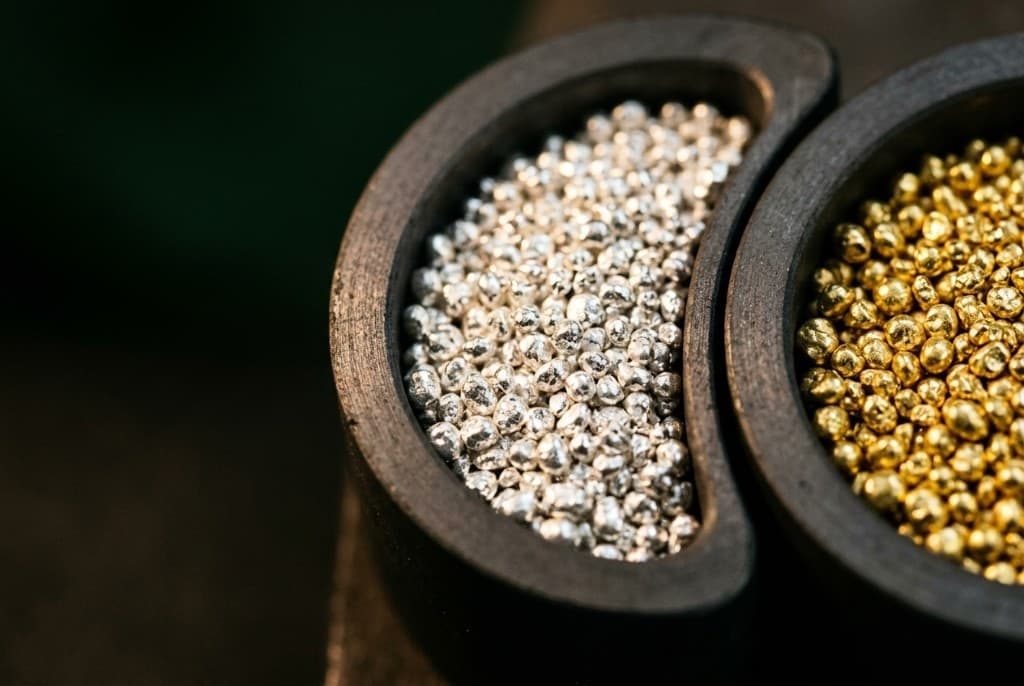
Small shot, ready to weigh and use. The working choice for jewellers and casters: it melts evenly and you take exactly the amount each job needs.
Bar
One solid piece, stamped with its weight and purity. The choice for holding the metal rather than working it.
Liffey Metals bars are refined and poured in-house to 99.9% purity. They are not LBMA bars. We're happy to provide an assay on the metal on request.
Cash
We refine the lot, take our charge in metal and pay for the rest by bank transfer at the published buy price. The choice when the money is more use than the metal.
Supply
Where the metal goes next
Metal we refine on our own account goes back to the trade as casting grain and bars. Some of the silver is made into silver nitrate and other precious metal salts for laboratories, assayed batch by batch and traceable back through the refining to the lots it came from, sold through Liffey Chemicals.
The founder's account of that chain, from an Irish canteen to a laboratory shelf: from Irish scrap silver to silver nitrate.
Refining, question by question
Why is a refining lot priced on fine content, not gross weight?
Because only pure metal comes back. The copper, zinc and other base metals in sterling or karat gold are removed in refining, so the honest figure to work from is the fine gold or silver in the lot, measured by XRF on intake. A 2 kg sterling canteen is 1,850 g of fine silver, and that is the number everything is counted on.
What is the minimum lot size and the turnaround?
Tell us the metal and an approximate weight and we give you a date. Small lots are batched; anything over a few hundred grams can usually be run on its own. Turnaround is confirmed when the lot is booked in.
How is the charge worked out?
One charge, taken in metal rather than cash, as a share of the fine content measured on intake. It is confirmed in writing for your lot before anything is refined, and there is no invoice and nothing else to pay.
Are the bars LBMA Good Delivery bars?
No. Liffey Metals bars are refined and poured in-house to 99.9 percent purity and stamped with their weight and purity. They are not LBMA bars. We are happy to provide an assay on the metal on request.
What about stones?
Stones do not survive refining. Tell us about any worth keeping at intake, before the lot goes near a melt, and they are dealt with separately from the metal.
Do you refine silver plate?
No. The silver layer on EPNS and other plated wares is so thin that the recoverable silver is negligible. We will say so plainly rather than take the lot in.
Can I take cash instead of metal?
Yes. Say so when the lot is booked in and, instead of grain or a bar, we pay for the refined metal by bank transfer at the published buy price. If you would rather not refine at all, we also buy scrap as it is, at the prices on the gold and silver pages.
Do I have to be in Dublin?
No. We refine in Dublin and take lots from anywhere in Ireland by insured post. Post the metal, it is weighed and XRF tested on camera on intake, refined, and posted back; or drop it in and collect it in Dublin by appointment.
Start a refining lot
Tell us the metal, an approximate weight and whether you want grain, a bar or cash back. We confirm the terms, the turnaround and a lot number, and you follow the lot in your account from intake to return.